“In LATAM telecom, ambition is everywhere. The edge goes to telcos that can execute.”
The Latin America telecom market spans 33 countries and more than 100 operators, with ARPU below levels seen in US, Europe and Japan. After years of challenged momentum, a shakeup is underway as incumbents exit some markets, consolidators absorb assets, and new entrants arrive with cost mandates and fresh investment. A mix of pressure and motion is producing a distinct innovation logic shaped by constraint.
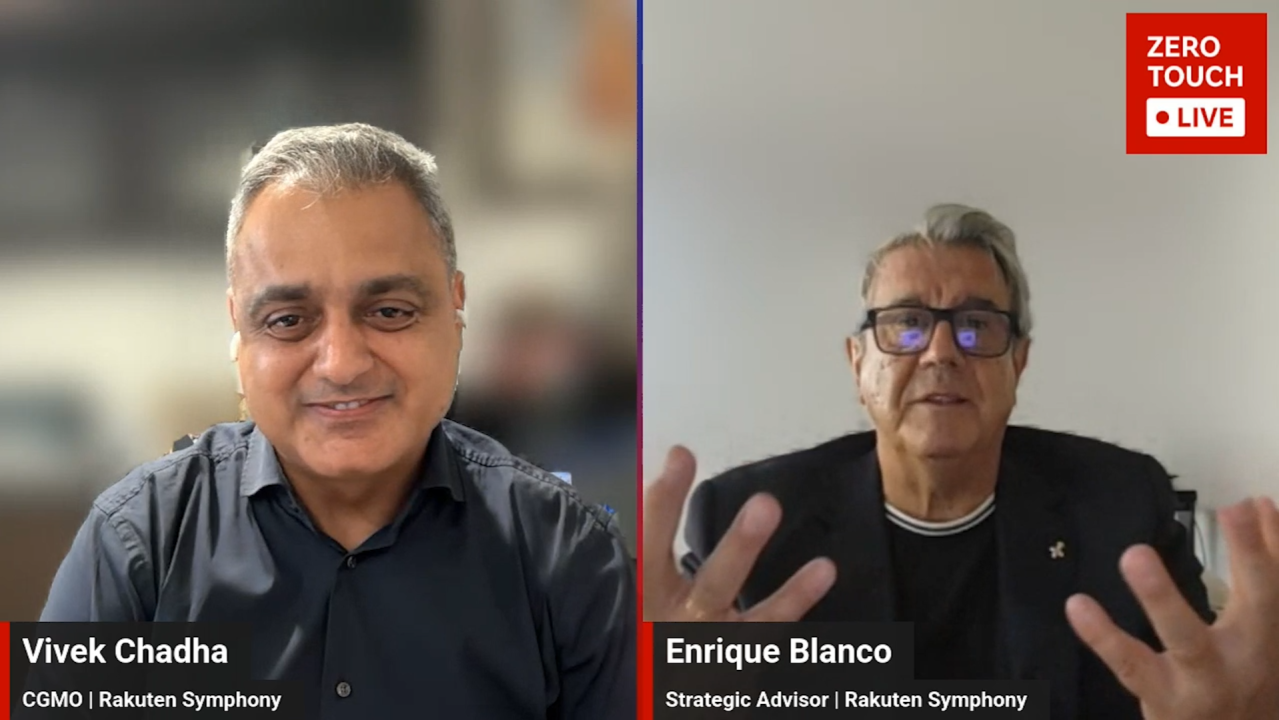
On this week's Zero-Touch Live, Rakuten Symphony’s Sachin Mahajan spoke with Mauricio Gonzalez Nappa, head of the telecom vertical at LATAM system integrator Isbel, which supports tier 1, tier 2 and tier 3 operator OSS, BSS and RAN deployments. They dove into what is happening on the ground as operators across the region pursue autonomous network ambitions, explore AI use cases to offset low ARPU and reassess the role of Open RAN.
📺 Watch the replay below.
When constraint sets the agenda
Sachin and Mauricio covered the forces reshaping LATAM telecom, exploring how:
Low ARPU acts as a forcing function. In the LATAM region, customers expect Netflix and Disney-grade digital experiences while operators work with margins far thinner than peers in higher-ARPU markets. This gap pushes operators toward cost efficiency creativity, digital onboarding and partnerships, including reselling and hosting hyperscaler services where the regional data center split still leaves room to grow.
Autonomous ambition is outpacing execution. Awareness among CTOs and engineers is near universal, but organizational complexity, integration difficulty and TM Forum compliance challenges can stall progress. One tier 2 operator that set out to build toward Level 3 autonomy in-house, despite strong engineers, ultimately switched to buying a tested, TM Forum-compliant product.
Early AI traction is value-focused. Three use cases demonstrating promise include support-call deflection when a third-party streaming platform goes down, predictive maintenance on fiber, MPLS and RAN that times replacements before failures, and energy optimization to cut the heavy power draw of base stations.
Open RAN exploration increasing. Open RAN is gaining traction, led by tier 2 and tier 3 operators, with the AI-driven squeeze on hardware supply making multi-vendor flexibility more valuable.
In a fragmented and cost-pressured region, operators making real progress are turning constraints into a reason to rethink how networks get built, bought and run.
Every generation from 3G to 5G followed the same playbook: build a new network, absorb the cost and wait for customers to arrive. Years after the launch of 5G, most markets are still evolving toward it and sustained ROI remains challenging. As the industry starts defining 6G, the architecture decisions made in the near term will determine whether that cycle repeats.
Every operator running agentic AI in production eventually faces the same question: is the token spend worth it? Most of that conversation stops at the cost of a single API call, when the more useful question is whether the agent made a good decision. In other words, did it earn its budget or quietly burn it?
Airline credit card partnerships now generate more profit than the flights themselves, in some cases several times over. Every major U.S. carrier runs a co-branded credit card program built on similar swipe-fee mechanics. Why isn’t telecom capturing the same returns?
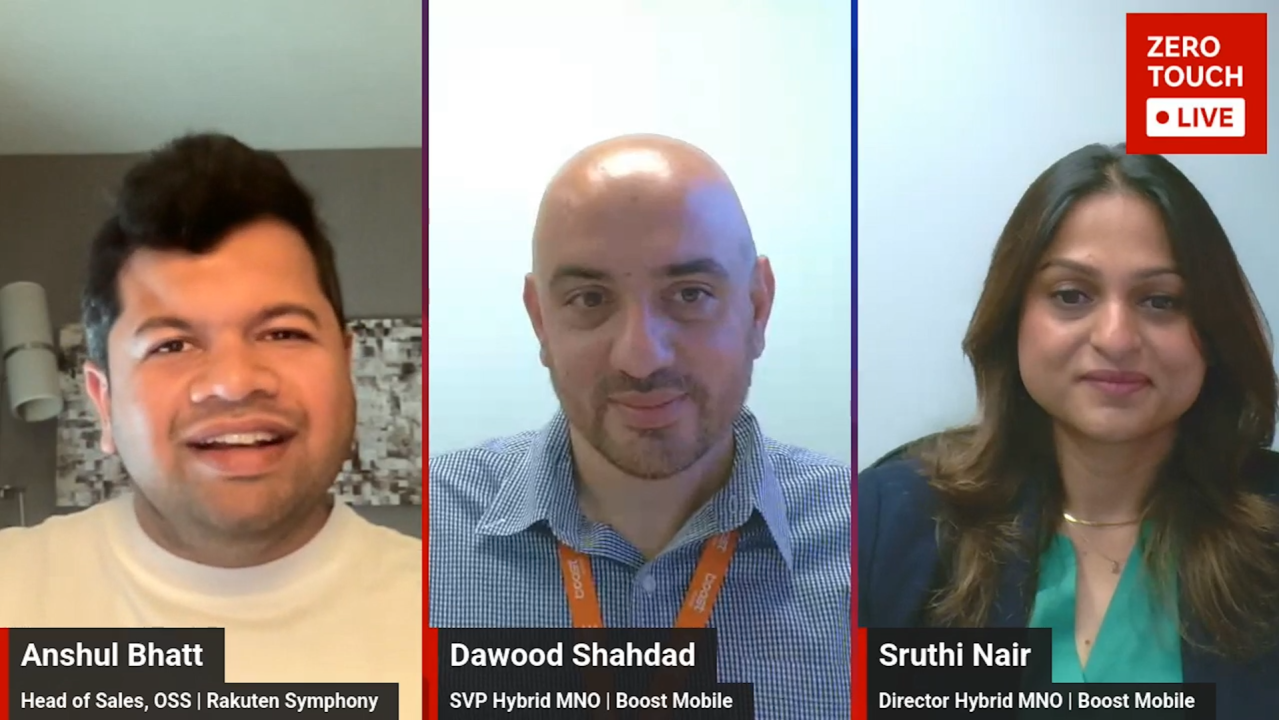
On this week's Zero-Touch Live, Rakuten Symphony's Anshul Bhatt speaks with Boost Mobile's Dawood Shahdad, SVP of Hybrid MNO Network, and Sruthi Nair, Director of Voice Core Engineering, about building one of the few operator networks running fully cloud-native on public cloud.